Friday, April 13, 2012

Research Proposal


Miami has long been considered the cultural hub of the Spanish community, largely in part to the massive immigration of Cubans, Puerto Ricans, and Central Americans alike. More than half of the population is Hispanic and this has major effects on the city itself. The economy of Miami relies heavily upon these individuals for its success and the politicians of the city know this. For the third essay, I want to delve into the world of politics of this city and find out exactly how these officials receive their respective positions. As a model case of the city politics, I am going to use the 2009 mayoral campaigns of Tomas Regalado and Joe Sanchez.
            In “Locals, Exiles, and Mobiles”, we read that the past elections of this city have all been races to “out-Cuban” one another, or prove to the voters that they have the most Cuban heritage in them and that they have their interests at heart. With Cubans representing such a vast majority of the citizens of this city, these politicians want to play directly into the Hispanic population to ensure a successful election. This idea is backed up with the fact that there has not been a non-Hispanic mayor in Miami since the end of Stephen Clark’s term in 1993. Taking this knowledge, I want to explain how the culture, economy, and essentially the life of this city is dependent upon the Hispanic population within this city. 

Thursday, April 12, 2012

Miccosukee


    In a city so focused on tourism, we neglect to acknowledge the first group of people that first inhabited the region.  To what extent has the growth of tourism in Miami corrupted the Miccosukee Indians’ culture and tradition?  This research question is important because the area's history is important to the shaping of what it's like today.  As a group not widely recognized, the Miccosukee Indians have faced hardships that tested their strength and determination to preserve their native culture.  In order to address my main question, I plan to research and learn of the tribe's traditions, beliefs, and culture to gain a better understanding of their way of life. How has the tribe tried to preserve their culture when everything around them is so rapidly changing? To what extent have they assimilated into modern day society?


   To the left is a photograph of a Miccosukee child.  The child seems to be filled with curiosity while playing in a field.  When I glanced at this photo for the first time, right away I had a striking sense of deja vu.  It closely resembles the photograph I have seen so many times before on a bookshelf in my home.  This photograph, to the right, is my father as a child (c. 1965).  The similarity is obvious, but what can't be seen through these photographs is the story.  My father’s biological mother was a Navajo Indian, but he was given up for adoption as a baby because her case was not accepted in her native culture.  I am curious about my ancestors and how their decisions have influenced where I am today.


     The intended audience will be those who, like myself, have found a desire to discover the foundations of the past. Qualitative material needed to answer this question includes knowledge about the Miccosukee culture - how they interacted with other groups of people and with the land around them is most important to the significance of the research question.  Also, knowledge about the events that led to the growth in population in Miami, which ultimately increased tourism, will address how it impacted the Miccosukee tribe.  Quantitative material needed might include statistics about tourism and population growth during the time.


Miami: A city where dreams survive
Miami is more than beaches and tropical weather. At the start of it all, there was a man who had a dream. The research question I seek to answer is : Why is Miami a city where dreams survive? George E. Merrick was the founder of Coral Gables and the University of Miami. He had a dream that seemed impossible to accomplish at the time. He made it happen with hard work and perseverance. Although the both the city and university suffered a terrible hurricane, the dreamers kept dreaming and persevered through conflict. Today, Coral Gables and the University of Miami are successful. The intended audience for this project is people who are mobiles in Miami. This research question is important because it allows the audience to see all the conflict the city has gone through and how the history of Miami represent dreams that have survived in people back then and still today. 

Some specific topics I would like to include are how the founding and growth of the University of Miami are symbolic to what the city is. The University has endured much hardship over the years and still stands today as a strong institution. Also, the city of Coral Gables and the city of Miami have flourished to what they are today because of visions that people believed in. Why do I describe Miami as a city of dreamers? I hope to answer this question by attempting to make a connection between the founders of Coral Gables and the university to the exiles that have come to the city. The exiles that come to Miami come with a dream of freedom and a better life. Miami is made up of exiles and exiles are the ones who have transformed Miami to a diverse place. Miami was founded on dreams and continues to be a place where others can have dreams that survive.

Miller School of Medicine


                      It has been long perceived that money, fame, and power run in parallel lanes. But to the locals, the people who consider Miami their home, their city has become shaped by people who are drawn to Miami by the amenities, the mobiles who are. Taking a look at how the University of Miami has made itself known over the decades since its establishment one particular instance stands out. In 2004, when the Miller family donated $100 million dollars to the University of Miami’s medical school in honor of Leonard Miller the university decided to interject Leonard M. Miller into the school’s official name. The Miller family was not known and still there remains little public information about the family’s prominence and relation to Miami, if any. UM’s medical campus is located in the hub of downtown Miami; one metro station after Overtown and a few more before Hialeah.

            Many academic journals have taken a look at the demographic make-up of Miami beyond the usual metrics of race, income, and age. Applying these metrics to the surrounding environment of the medical campus the gap between the funding of a private university and Overtown homeless shelter that can barely open their doors may be justified. Through research about the psychology of philanthropy and the associations relating the locals, Miller family and UM together a flawed mentality will surface. 

Funding has become the driving factor behind universities, therefore creating a more corporate image to institutions of higher education. As with any multi-million dollar deal the script of conversations conducting behind closed doors will never be known. In 2004, UM became the eighth medical school in the nation to be renamed in honor of a donation. In reality, weather the $100 million gift is spent or invested it is inevitable that at least a portion gift will be lost in circulation. 52 years and $100 million dollars later the name change to Miller School of Medicine will long outlast the gift. Miller is the name that changed the path of the university but to the locals the name is plastered to the side of a building they may never see. 

Research Proposal- Rebecca Singer


The question of my research is: How does the future World Resorts Miami represent coming social changes in the city? World Resorts Miami is a casino and resort complex that is in the process of being approved and built along Biscayne bay and the causeway to Miami Beach. The site will affect the economy and the social structure already in place in the area. The topic of World Resorts Miami is relatively new as the land was just purchased a few months ago however, many studies have been done about the economic and social effects that it will have on the city. In the research paper, I would like to explore how it will influence lower class communities that surround and the mobile culture that it will inevitably attract.
The intended audience of this project could be politicians and activists who either support or condemn the project. I will try to intertwine the four elements needed for the Literary non-fiction essay. I will use a personal experience from when I visited Atlantic City, NJ, the future building of world resorts Miami, a historical effect that is comparable to this one all while keeping the audience I mentioned above in mid.  I will need to have both qualitative and quantitative material to answer my question. Currently, I plan to use the demographic map of the city that we used in class as a source. I will need information about a past occurance like this, mobile culture and the current situation of lower income people in Miami. 

Research Proposal


Daria Suvorova

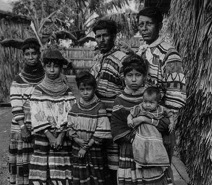
Research proposal on the Florida Seminoles.

     No wonder why I choose this topic. Seminoles are one of the greatest and proudest tribes through the whole America. They have a rich history that lasts for centuries and centuries. But unfortunately most of it is full of sadness and unfairness towards them. They play a huge role in Florida and Miami history, as one of the first inhabitants and locals. Therefore, in my research paper I would like to discuss this unique tribe. Though, my goal is not just to retell my audience the whole Seminole history, but to concentrate on a specific time period. That is the beginning of the 20th century. This was one of the crucial years in the Seminoles life as they were between two controversial time periods. They had past full of wars and quarrels with the American’s. And the future, that included total control and care from the Government. So what will work best for them, for their traditions and for their morality? Should they stay as an isolated tribe or should they become an entertainment for the whole world?

     There have been done similar works on this topic, but slightly different to what I’m actually looking for. My voice is the voice of the future, so I have this opportunity to look at this problem from different angles and to use various researches. My audience is someone who is very understanding and sensitive as well as people who look for historical evidence. My goal is to bring empathy towards the Seminoles, and the best way to do it is through my personal voice. Also, I aim to smoothly mix up my position with different types of sources. I feel that the best way to unite all my material is through the writer Minnie Moore Wilson. She was one of the biggest figures at that time and one of the first ones who actually looked at the Seminoles dramatic situation. Eventually, her writings will not fully cover my question. Therefore, I will use other authors and materials to make my essay more global. My historical research will mostly include information from the books and Special Collection archives.

     All in all, I want to show how this red race is and was important. They are the main locals and the main representatives of Florida and Miami. They are what the history of Florida stands upon. Hence, the way they been treated was so disrespected and wrong, that it shows the cruelty of the American Government. Lastly, the way Seminoles were dealing with so much pressure, really intrigued me and made me search for the answer.


Would Miami locals own their city if the mission of The Miami Women’s Club of 1930 had been accomplished?

    Since 1930 Miami has changed drastically and it seems as though it was out of anyone in particular’s control. However, if the locals of Miami had taken control, the city would most definitely not be the same. If the Miami locals had held on to their pride of every part of the city, the city would not have been taken over by people who do not call it home. An inspiring and optimistic group of women called The Miami Women’s Club were dedicated to creating a city that they could be proud of. After creating the library system in Miami and assisting in creating the Everglades, their voices became muffled in the traffic of mobiles stacking up skyscrapers along the beautiful beaches and the extraordinary inflow of cuban immigrants.
    The main focuses of the The Miami Women’s Club of 1930 were agriculture, environment, health, industry, community business and purchasing local goods. Today, Miami has issues in all of these areas, because the foundation for them was not built correctly. If these women were given the opportunity to build these ideals into reality by locals for locals, the city would function today in a more just way. However, now that Miami has been build to neglect locals, they are ignored. The women’s club in 2012 work with the community to support art of all forms and the home life of women (with a focus on unwed mothers). These issues are not unimportant, but they have far less of an impact on the whole of the city. It seems to me that when the voices of the women of Miami were silenced, they gave up on creating the city and settled for fixing it. Miami is no longer in a position to form its own identity, because it has already been established by income seeking mobiles and exiles trying to support themselves. If these local women had been able to create the city in the way they had envisioned it, the city would be owned by the locals and not outsiders.
    The depictions of Miami constantly fall into the hands of mobiles and exiles. I want to focus in on a group that is not only local, but female. Their underrated perspective could have made the city a place locals could have owned and been proud of. I would like to use an abstract idea to bridge the local community today to the ideals of the Women’s Club in 1930. They are both perspectives that are clouded by the media, but strive for the same ultimate goal. The Women’s Club of 1930 wanted a city to call their own and the locals today deserve that ideal.


"MIAMI WOMANS CLUB - Not for Ourselves Alone." MIAMI WOMANS CLUB. Http://www.herbsosa.com/. Web. 12 Apr. 2012. <http://themiamiwomansclub.org/index.html>.

This is the website of the Miami Women’s Club themselves. It is the perception the these women are putting out into the world. The website is intended for people who have an interest in donating money, joining the club, or wish to attend one of their events. The website include a summary of their history and their current committees and events. It is very important to use information promoted by the people themselves I am speaking about. Although I was criticizing their current efforts in the community, I took the information to back that up from information published under their name. It was not as personal, like the Year Book source, as I would have hoped, but it was helpful in providing insight into the club at present.


Cohen, Howard. "Woman’s Clubs Build on History to Better Their Communities." Miami Herald [Miami] 23 Feb. 2012. Print.

This article is a little biased, because it is trying to be a flowery article on how great the Women’s Club is in helping the community. However, it contained a lot of great history on the women’s club and a perspective on how the club has evolved. It was interesting to see how the women were presented as never changing their goals throughout history when the contradiction between their yearbook from 1930 to the website of 2012 is so obvious. Still, the intention of the piece was to make people in Miami to feel good about there community in some small way.


Dade County Federation of Women's Clubs Year Book. Miami, 1932. Print.

This resource provides a lot of unknown insight into the goals of The Miami Women’s Club in 1930 (to 1932). It is shocking how advanced their ideals were for the city of Miami and it proves that they were smart and should have held more power. The intended audience was the member’s themselves and therefore the statements appear genuine. This resource is much more insightful into the inner workings of the Miami Women’s Club than both their website and the Miami Herald newspaper article on the club.